
The Origins of Halloween
Halloween began with an ancient Celtic festival called Samhain (pronounced /’saʊwɪn/). They celebrated their New Year on 1 November.
This date marked the end of summer and the harvest season. It was also the beginning of the cold, dark winter. The Celts connected this time of year with death. They believed that on the night of 31 October, the world of the living and the world of the dead came closer together. They thought that the spirits of dead people returned to Earth that night.
In AD 43, the Roman Empire took control of most Celtic lands. During the next 400 years, two Roman festivals became part of Samhain.
The first festival, Feralia, took place in late October. The Romans used this day to remember the dead. The second festival honoured Pomona, the Roman goddess of fruit and trees. Her symbol was an apple. This may explain why eating apples and trying to catch them with your mouth became Halloween traditions.
On 13 May AD 609, Pope Boniface IV dedicated a building in Rome called the Pantheon to Christian martyrs. This led to a Christian celebration called All Martyrs’ Day. Later, Pope Gregory III changed the festival to honour all saints and moved it to 1 November. By the ninth century, Christianity had spread to Celtic areas. Christian traditions slowly replaced some older Celtic customs. In AD 1000, the Church made 2 November All Souls’ Day, a day to remember the dead.
Many people believe that the Church created this day to replace the older Celtic festival. People celebrated All Souls’ Day with large fires, parades and costumes. They dressed as saints, angels and devils. All Saints’ Day was also called All Hallows’ Day. The night before it became known as All Hallows’ Eve. Over time, this name changed to Halloween.
The History of Trick-or-Treating
The tradition of wearing Halloween costumes comes from European and Celtic customs. Hundreds of years ago, winter was a difficult and frightening time. Food was often limited, and many people were afraid of the dark. The short winter days made life even more difficult.
People believed that ghosts returned to Earth on Halloween night. They thought they might meet these ghosts if they went outside after dark. To avoid being recognised by the ghosts, people wore masks. They hoped the spirits would think they were ghosts too.
People also left bowls of food outside their homes. They believed this would keep the spirits happy and stop them from entering their houses.
The American tradition of trick-or-treating may have started with these old All Souls’ Day celebrations in England. During these celebrations, poor people visited houses and asked for food. Families gave them special cakes called “soul cakes”. In return, the visitors promised to pray for their dead family members.
The Church supported this tradition because it wanted to replace the older custom of leaving food and wine outside for spirits. This activity was called “going a-souling”. Later, children began visiting houses in their neighbourhoods to receive food, drinks and money. Over time, this became the trick-or-treating tradition we know today.
In the late 1800s, people began changing Halloween into a celebration focused more on communities and neighbours. They wanted to move away from ghosts, tricks and witchcraft. At the beginning of the 20th century, Halloween parties for children and adults became very popular. These parties included games, seasonal food and costumes.
The Many Ghosts of Oxford
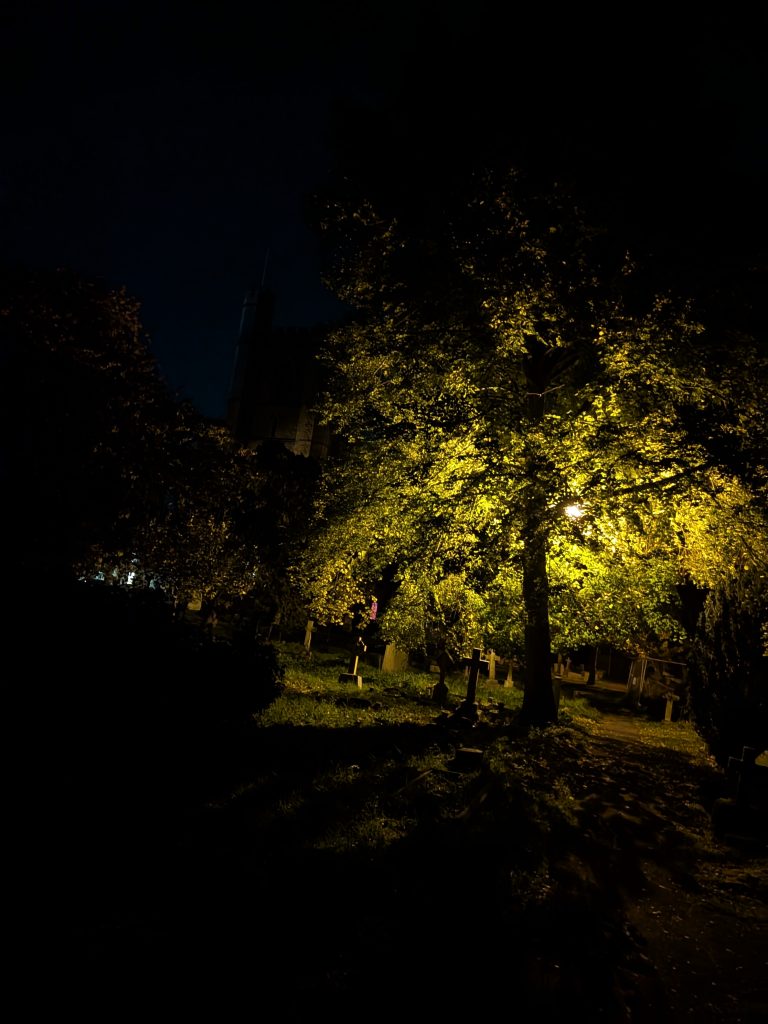
You are never far from the dead in Oxford. Alongside its many churchyards, cemeteries and tombs, Oxford is such an old city that whenever construction work is done, old bones tend to pop up. In 2008, for example, excavations at St John’s College revealed a mass grave that historians believe to be a result of the St Brice’s Day Massacre of 1002 when King Aethelred the Unready ordered the killing of all the Vikings in England.
As such, Oxford has developed something of a reputation for ghosts and spooky goings on, which many people believe are more present around this time of year, as Halloween is when they say the veil between the worlds of the dead and the living grows thin.
Some parts of Oxford have not changed for hundreds of years and if you’re walking through the city at night, in certain small side-streets without cars you might trick yourself into believing you’ve travelled deep into the city’s past. Here are a few of Oxford’s purported ghosts and ghouls that might give you a scare.
George Napier was a priest beheaded by Elizabeth I, it is said that once a year he rides a ghostly carriage from where he hid in Temple Cowley to the city centre, still looking for his missing head.
Another cranially-challenged individual is Archbishop William Laud, who had his head quite rudely separated from the rest of him for supporting the losing side in the English Civil War. Unlike George, he knows where his noggin is. Students of St John’s have reported seeing him rolling his own bonce across the college lawn like a bowling ball!
Poor Prudence Burcote also came a cropper as a result of the English Civil War, though hers is a more romantic tale. From a wealthy roundhead family, she fell in love with an officer from the opposing cavalier army. Just as in Romeo and Juliet, this ended badly and Prudence, who is said to have died of a broken heart when her lover had to leave for war. She still waits for him some dark nights on Magpie Lane.
Obadiah Walker, once Master of University College, survived the civil war, but his life was not a happy one, as such his tortured spirit is said to roam the hallways of the college he once called home. Surprised students have said that they encountered a mysterious professor on the upper floors who they didn’t recognise . Is it scarier to meet the ghost of a teacher, or the real life teacher who’s angry you haven’t done your homework?
In Wadham College, head porters and college scouts have reported multiple encounters during night patrols, seeing white-robed figures near the hall fireplace and moving between the chapel and the hall. Porters have also reported weird phenomena such as strange pressures being felt on people’s chest or the sound of pounding at the gates when there is nobody on the street.
At New College, the ghost of the famous Reverend Spooner is said to haunt the chapel. Spooner gave his name to the term ‘spoonerism’, when you mix up the first letters of a phrase like ‘chish and fips’ or ‘whack and blite’. Maybe old Spooner likes Halloween because there’s no way you can mix up the phrase ‘trick or treat’ like that.
On Magdalen Bridge, you might encounter a small figure with a dirty blackened face and a scruffy coat falling backwards into the river. This is said to be the ghost of a chimney sweep, murdered by a Tory supporter who felt embarrassed that the young sweep had laughed at him.
Of course, whether you think these are just fun spooky stories or evidence of some mysterious world beyond is up to you.
Curses and Witches
Ghosts are not the only paranormal tales in Oxford history. In 1577, a bookseller named Rowland Jenkes was found guilty of speaking treason against Elizabeth I and was sentenced to have his ears nailed to a wooden block! Jenkes cursed the court and the men of Oxford for this. Most tho
ught nothing of it, plenty of prisoners had said terrible things about the people who put them there and nothing happened, but that summer over 300 men in Oxford, including the sheriff and nobles who had passed judgement on Jenkes, died of a mysterious sickness which seemed to avoid women and children. It also didn’t kill any prisoners, usually the place you’d expect a disease to spread most rapidly. This was known as the Curse of the Black Assizes and no explanation has ever been found.
Oxford also had its share of reported witches. In the seventeenth century, three women were accused of witchcraft by a 14-year-old girl called Anne Gunter, who blamed her seizures on the women. However, a sceptical man named Thomas Hinton managed to prove that Anne was fabricating some of her symptoms, leading to the three alleged witches being released. What’s worse, further investigation found that Anne was the victim of her cruel father Brian, who had a grudge against the accused women and had been poisoning his daughter in order to claim that her illness was being caused by witches.
In Kirtlington, just north of Oxford at one point a shapeshifting witch who could turn into a fox was said to have lived. Local hunters who pursued the fox once saw it go into a cottage but when they entered the cottage all they found was a woman, who was panting as though she was out of breath from running.
Halloween today
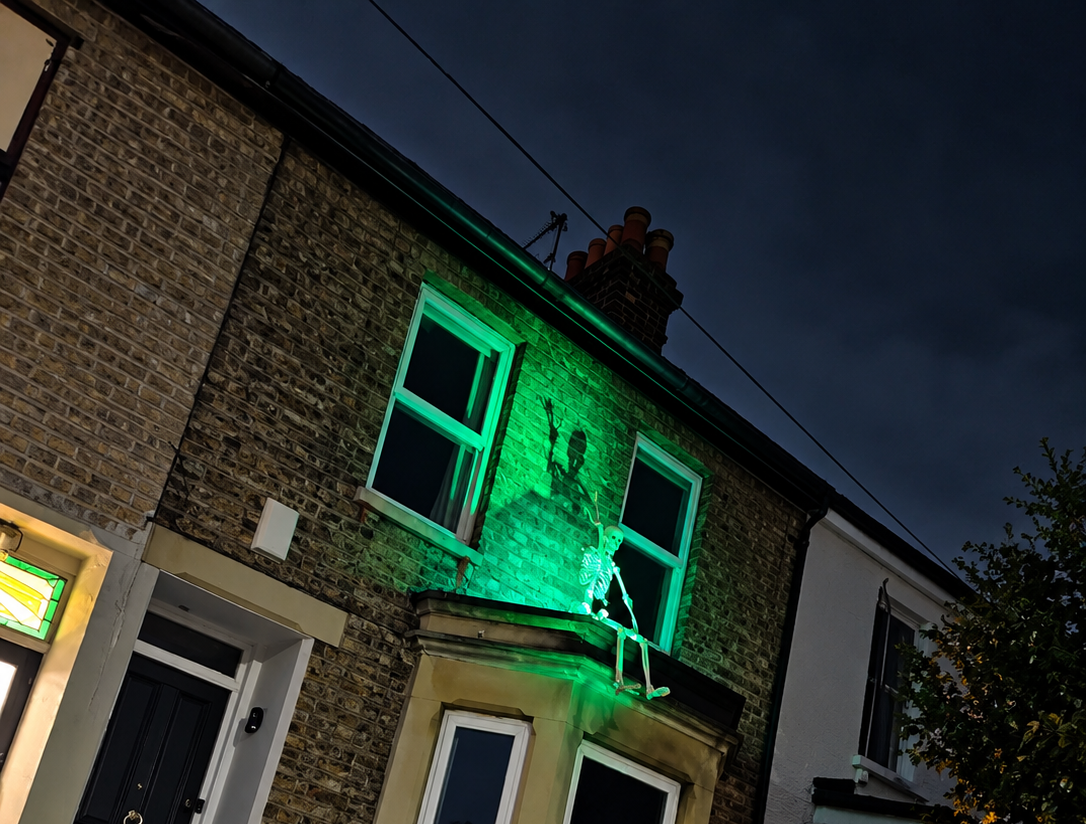
In Oxford today, Halloween is celebrated in many ways. You’ll see excitable little children out trick-or-treating with their parents in adorable costumes. Halloween decorations will be up in many houses and businesses and shops will sell special Halloween treats. For adults, many people go to costume parties where they might play traditional Halloween party games such as apple-bobbing. Some people like to go with the traditional scary costumes of vampires, zombies and other monsters but people can dress up as anything they like, something scary, something funny or something cool. It’s a great way to express your individuality.
Just watch out for those ghosts!