
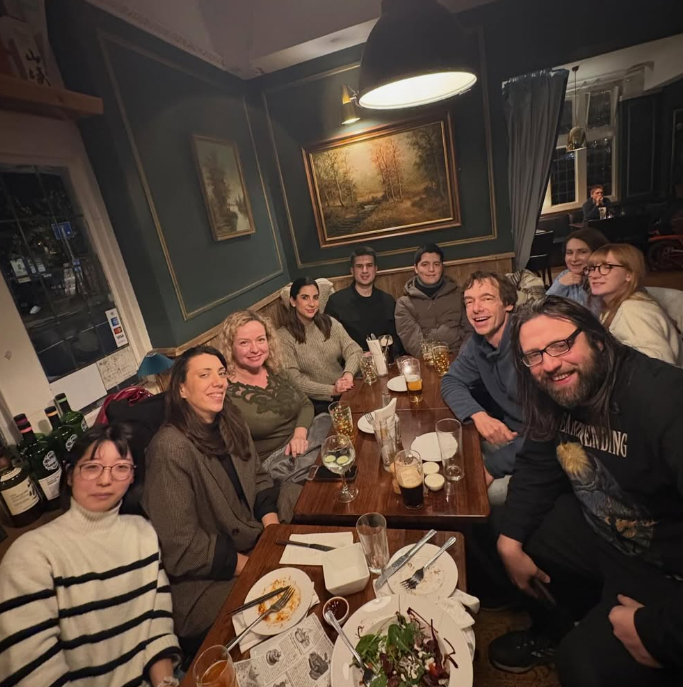
The pub is an iconic part of English culture. Originally short for ‘public house’, they can trace their history back through medieval alehouses all the way to Roman taverna. The 17th century writer Samuel Pepys called pubs ‘the heart of England’. It’s a great social leveller, where people from all across society, rich and poor, old and young, can exist in the same place in (most of the time) peace.
You can go and hang out with friends, sit quietly by yourself with a book, or start chatting to some locals. Whether you want a quick drink or a good hearty meal, the English pub is a place of community whether you drink alcohol or not. Many pubs have beer gardens or even activities for families and children in the middle of the day. Some pubs will have live music on some nights, karaoke evenings or the popular weekly pub quiz, where you can test your trivia knowledge in teams against other pubgoers.
Of course, if you do want to have a pint of traditional English ale or a nice glass of wine, remember to bring your ID if you are lucky enough to look young!
Some pub etiquette:
- Pubs rarely have table service. You go to the bar to order.
- No queues. Despite the English love for queues, at the bar you stand at the bar and wait for the bartender to get round to you. It’s good manners to point the bartender towards someone who has been waiting there longer than you.
- Rounds: When you’re with friends, people traditionally buy drinks in rounds. So if you’re with two other friends you, one of you buys all three drinks and then when you’ve all finished the next person buys three drinks, and so on. This is not compulsory, especially if one of you is drinking a much more expensive, or much cheaper, drink than the others, or if you’re only planning on having a single drink.
- If you spill someone else’s drink, you should immediately offer to buy them a new one.
- If someone is carrying a drink (or multiple drinks) through a crowd or a narrow area, you should always let them pass first if you don’t have a drink.
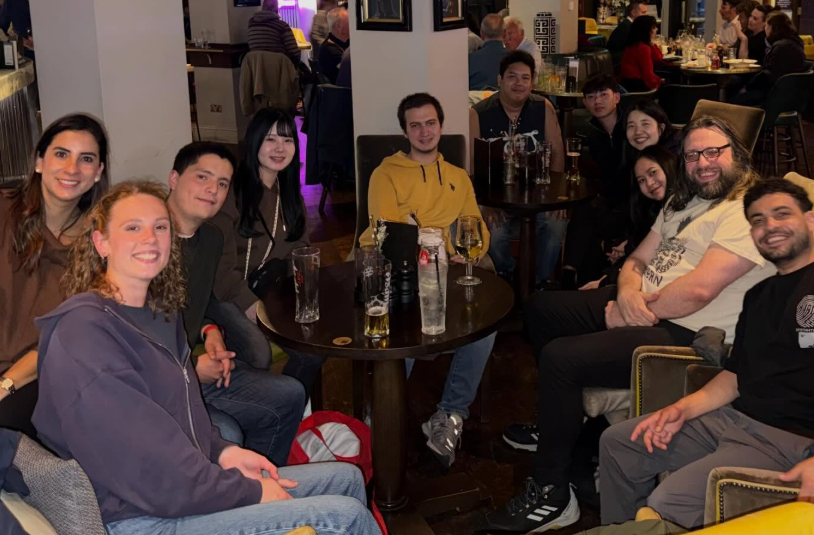
Here are a few of the pubs you might want to visit in Central Oxford.
The Red Lion
Situated right next to the school, this is the most common location for our weekly Thursday pub night where staff and students can hang out and chat in a more informal setting. It has a lovely heated beer garden and warm and friendly staff. A glass or two of beer or wine is sure to make you feel like a more fluent and confident speaker but try not to overdo it. Of course, you don’t have to drink alcohol to go to a pub. All pubs nowadays offer a wide selection of alcohol-free drinks, from tea and coffee to soft drinks to non-alcoholic beers. They’re just a great place to hang out and relax with your new schoolfriends.
The Wheatsheaf
Just round the corner from the Bear down another narrow alleyway is The Wheatsheaf. If you’re a fan of rock music and heavy metal then that’s the place to go. The original Wheatsheaf pub stood on this site from the year 1654 but was demolished and rebuilt in around 1897. It no longer holds concerts upstairs as it used to but still has a gritty, grimy rock and roll vibe and a free pool table if you fancy trying your luck against the locals.
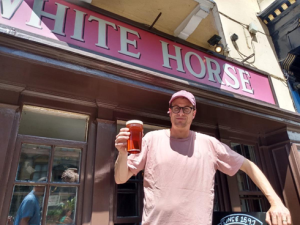
The White Horse
Situated in between the two parts of the famous Blackwell’s bookshop and featured in many episodes of the Oxford-set detective series Inspector Morse, The White Horse is named after the Uffington White Horse, a massive prehistoric carving in South Oxfordshire that has been there for 3000 years! This cosy pub is perfect for staying warm in the winter or sitting outside under the watchful eye of the Sheldonian Theatre’s famous herms in the summer.
The Turf Tavern
Probably Oxford’s most famous pub. If you didn’t know it was there you could easily miss it. Under the famous Bridge of Sighs, head down a narrow alleyway to find the famous Turf Tavern which has been serving thirsty Oxfordians for over 600 years! Originally called the Spotted Cow, it changed its name about 180 years ago. The name comes from the old term ‘turfmen’ for people who would take bets and as it was outside the old city walls (which you can still see part of next to the beer garden) gambling and other illegal pursuits like cockfighting often occurred here. Famous for its low-ceilings and cosy rooms (people were a lot shorter on average when this building was built), in more modern times the pub is known as the place Richard Burton proposed to Elizabeth Taylor, and where Bill Clinton famously ‘did not inhale’ as a student in Oxford.
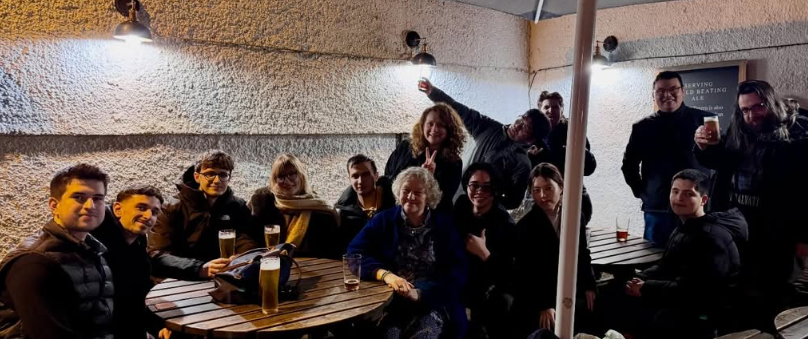
The King’s Arms
On the corner of Holywell Street and Parks Road. It’s been a frequent haunt of famous writers like Graham Greene, John le Carre, Philip Larkin, Iris Murdoch and more. It was here that Graham Green had drinks with the famous spy Kim Philby, head of the notorious Cambridge Five. Speaking of haunting, the King’s Arms also has a reputation for ghosts. It’s been said that in the back bar people have seen two spectral Oxford professors arguing about the quality of the wine while speaking ancient Greek.
The Lamb and Flag / The Eagle and Child
These two pubs are situated opposite each other on the wide road of St. Giles. The Eagle and Child (known informally as The Bird and the Baby) has unfortunately been closed for a couple of years as it is undergoing a long refurbishment but it dates back to the 17th century and hopefully should be open soon. Both pubs are well-known as the meeting places of the writers group The Inklings in the middle-part of the 20th Century. The most famous members of the Inklings were JRR Tolkien who wrote The Lord of the Rings and The Hobbit and CS Lewis who wrote the Narnia stories. In these pubs they would meet along with other writer friends and discuss their stories and characters, so if you’re a fan of either writer or the films based on their books, this is where those iconic characters and enticing fantasy worlds were dreamed up, with the help of some friends and a couple pints of ale. Christopher Lee, who played Saruman in the Lord of the Rings, recalled once meeting Tolkien in the Eagle and Child. Lee, a tall imposing man who served in the army, said that it was the one time when he was intimidated and speechless, being in the presence of his hero!
The Lamb and Flag has additional literary pedigree, being featured in the novel Jude the Obscure by Thomas Hardy. The name comes from the fact that it is owned by St John’s College and St John was known as the ‘lamb of god’.
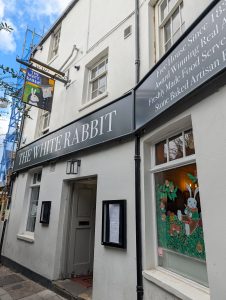
The White Rabbit
Right opposite the school is The White Rabbit. It’s been a pub since about 1830. It used to be called The Gloucester Arms and was a popular hangout for fans of rock music and heavy metal, but was renamed and remodelled and now with its large beer garden with heated seats, it’s best known for serving some of the tastiest pizzas in Oxford. So good that even our Italian students have said they approve. It’s named after another Oxford literary icon, Lewis Carroll (real name Charles Dodgson), who wrote Alice in Wonderland.
The Grapes
Opposite the New Theatre, The Grapes is known as Oxford’s Theatre pub, where traditionally actors and performers have relaxed before and after their performances at the Oxford’s New Theatre. Decorated with fascinating art of Oxford history, it offers a wide selection of traditional beers and ciders from around the UK.
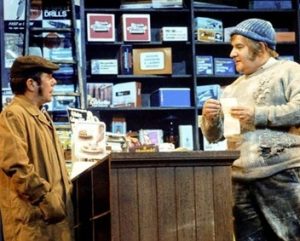
The Four Candles / The Swan and Castle
If you want a cheap and cheerful drink or meal, The Four Candles is the place to go. It is named after a famous comedy sketch by British comedy legend Ronnie Barker who grew up in east Oxford, which plays with the idea of people misunderstanding each other due to connected speech, something foreign learners of English will know all too well. The Four Candles is part of the JD Wetherspoon’s pub chain, the largest pub company in the UK, and as such it’s usually the cheapest place to find a pint of beer or a pub meal. While it might lack something in atmosphere and history compared to other pubs on this list, if you want to save money it’s probably your first choice. That, or its sister pub The Swan and Castle which is another Wetherspoon’s pub just around the corner that’s part of the old Oxford Castle and Prison complex.
The Head of the River
The Head of the River is usually pretty quiet in the winter, but in the summer when the sun is shining it’s one of the most popular pubs in Oxford, with its large beer garden right next to Thames where you can watch rowers from the various college rowing teams shoot by as well as an assortment of ducks and swans.
The Bear
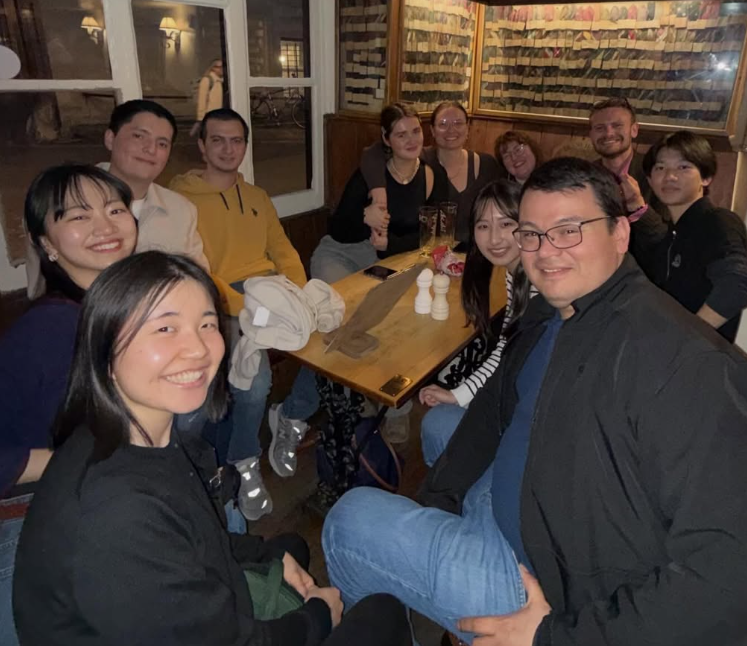
Beating The Turf for the title of Oxford’s oldest pub is The Bear. It was founded in 1242 and for context; the oldest of the Oxford University Colleges was founded in 1250 so it’s even older than most of the university! Like the Turf it has very low ceilings so duck your head if you’re a bit taller. Inside is pretty small and the walls are covered in ties which members of Oxford University clubs used to cut off and pin to the wall when they graduated. Nowadays it has a large outdoor patio with heaters as well as its very cosy indoors.
It’s called the Bear because in the past they used to keep a bear outside in a cage for entertainment. Thankfully we understand a bit more about animal rights nowadays.
The Crown:
Down a passage off Cornmarket Street, the Crown has been a pub for several hundred years though the current building is situated where the stables of the original pub were. In the early 17th century it was known as The Salutation Tavern and run by John Davenant who later became mayor of Oxford. John’s close friend Bill often stayed here with him while journeying between his hometown of Stratford-Upon-Avon and his work in London. Bill even became godfather to John’s second son. Bill, of course, being better known by his full name of William Shakespeare.
The Chequers Inn:
Dating back several hundred years and featuring a beautifully restored interior with the original wooden beams visible, the Chequers has quite the unusual history. In the fifteenth century it was moneylender’s which gives the pub its name to this day, as the chequer board was an old symbol of money-lending. At one point, it was Oxford’s first zoo and you would be supping your pint next to camels, sealions and coatis. It was also known as being associated with John Middleton of Hale, the tallest man in England who was over 230cm tall said to sleep with his feet out the window. Like the King’s Arms, it has a ghostly connection. It is said that there was a tunnel running from the pub basement under the high street and that monks who were hiding from religious persecution were trapped inside that tunnel and their spirits haunt the pub to this day.
The Market Tap:
The Tap Social is a local brewery that has a strong emphasis on helping the local community. It has a commitment to using only local ingredients and to employing prison leavers in its brewery to help them rehabilitate into society and change their lives so they don’t get sucked into a life of crime again. It has a few venues around Oxford including the Market Tap, which opened in Oxford’s historic Covered Market in 2023. It’s a lovely place to take rest from shopping at some of the markets many boutiques and shops and try one of their delicious locally-brewed ales or lagers while serving a good cause.
The Three Goats’ Heads
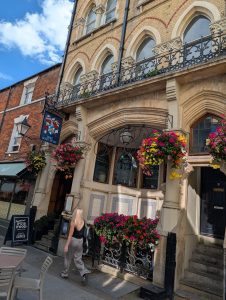
The Three Goats’ Heads harks back to an earlier time when pubs were owned by specific breweries so you’d find a different selection in each different pub that you went into. Nowadays you can find the big brands like Guinness in pretty much every pub in town. However, The Three Goats’ Heads is an exception, owned by the Sam Smith pub so you will only find specific beers that they make. Thankfully they make some fantastic beers. It has some eccentric rules such as no screens but that helps it have a tremendous traditional atmosphere and encourages you to put your phone away and chat in English!
The Oxford Retreat:
Situated next to the Castle Mill Stream, this was originally the site of the Navigation House, where boats transporting goods along the canals of Southern England would unload in Oxford. When it first became a pub it was known as The Nag’s Head (a nag being a name for an old horse like the ones which would pull the freight boats along the canal before engines). Evelyn Waugh, whose book Brideshead Revisited is one of the most famous fictional depictions of Oxford, was a regular during that time. Featuring good restaurant food and nice sheltered outdoor area overlooking the stream, it’s a great pub just a couple minutes from Oxford train station.
The Royal Blenheim:
Down a little side street on the way to Pembroke College, the Royal Blenheim sits opposite St Ebbe’s Church. A lovely little pub that shares its name with the beautiful Blenheim Palace just north of Oxford, where Winston Churchill was born.
St Aldate’s Tavern:
A historic coaching inn dating back hundreds of years, today it’s a great place to watch football games or other sporting events in the city centre.
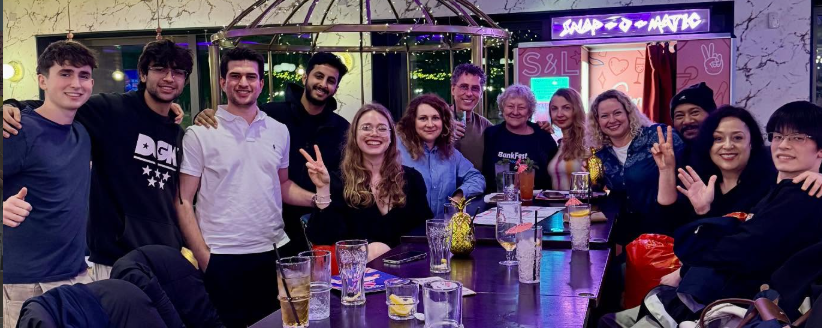
The Slug and Lettuce
A great bar for cocktails and a good restaurant for food, the Slug and Lettuce is situated in the historic Oxford Castle & Prison complex. Now converted into restaurants and a swanky hotel, it’s one of the oldest known sites of human inhabitance in Oxford, with the castle mound outside the pub dating back a thousand years.
The Plough Inn:
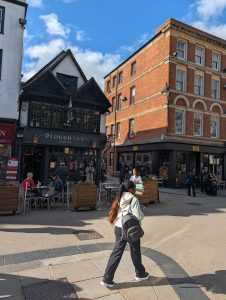
Though it was relatively recently converted back into a pub after spending almost a hundred years as a shop, there has been a pub on this site dating back to 1656. Now it’s a great place to play some board games while you have a drink and look out over the busy shoppers of Cornmarket Street.
These aren’t all the pubs in central Oxford, and there are far more in the other parts of Oxford like Summertown, Kidlington, Cowley, Jericho and Headington (and maybe we’ll get to those in a future blog), but certainly more than enough to get you started. Whether you’re going to our weekly pub night or venturing out on your own or with a group of friends, whether you want to enjoy the community atmosphere or just sit and relax in a place where some of the most famous writers and thinkers in English history have sat and relaxed in history, whether you’re looking for a good warm meal in winter or refreshing drink in summer, Oxford surely has a pub for you.